
Ibogaine has traveled a long way in a short time. A few years ago, it lived at the edges of psychedelic culture and in clinics in Mexico and elsewhere where its use goes largely unregulated. Today veterans’ groups champion it, and a presidential executive order names it twice. Supporters describe a single, grueling experience that quiets withdrawal and craving, sometimes after years of failed treatment, and other people seek it for spiritual insight rather than recovery. The medical literature, meanwhile, records dangerous heart rhythm disturbances and deaths.
I have spent more than forty years helping families through the crises that substance use disorders create, and that work has taught me to distrust any treatment sold as a quick fix. Ibogaine deserves that scrutiny twice over, because it produces a prolonged hallucinogenic experience while carrying real cardiac risk. I also take seriously the people who say it helped them, and their accounts are exactly why the drug deserves honest testing. What matters most is what the evidence can support today.
Roots in Central African Tradition
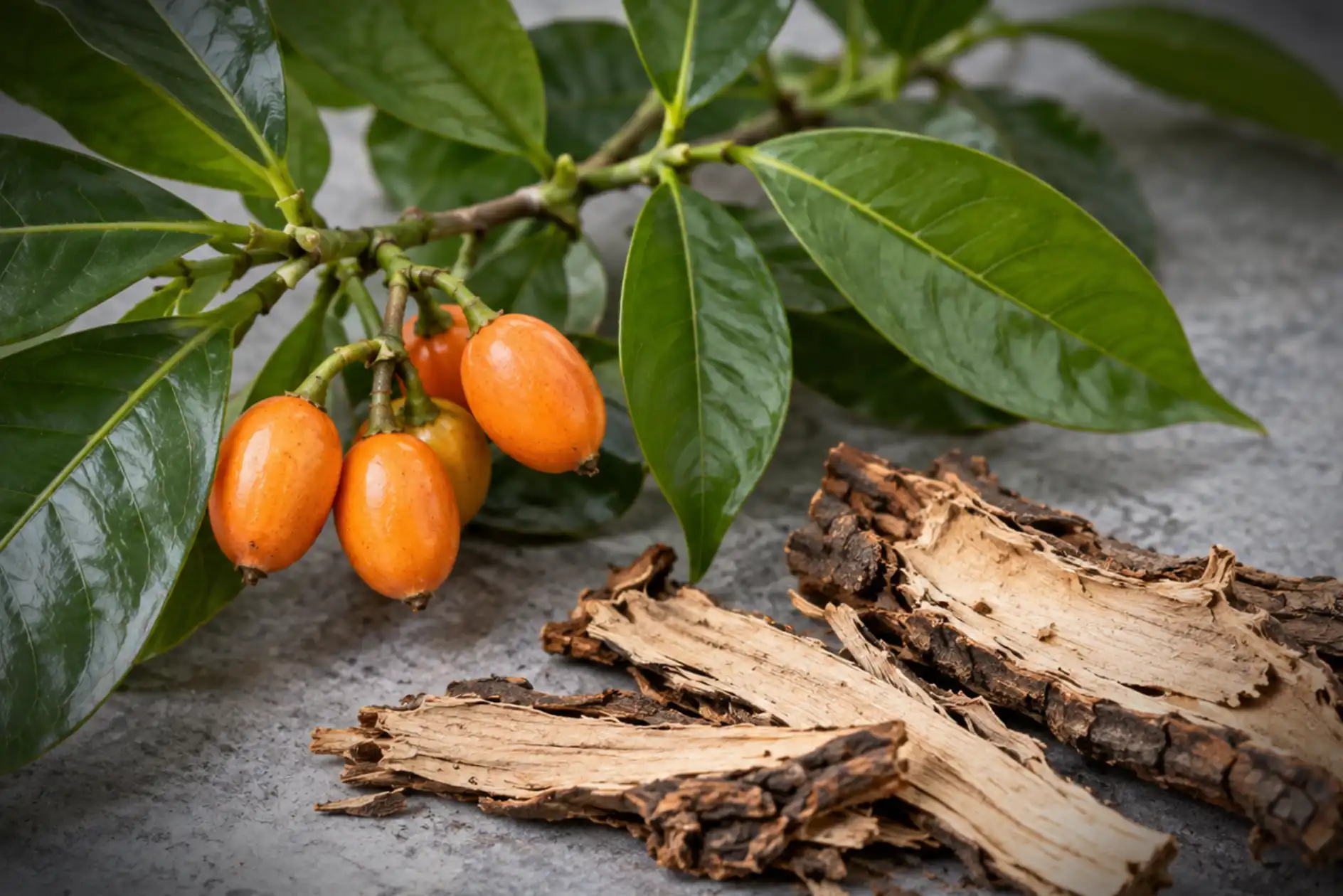
Ibogaine is an alkaloid drawn from the root bark of Tabernanthe iboga, a shrub native to Central Africa. In Gabon and neighboring regions, iboga holds a central place in Bwiti spiritual practice, where it may be taken in large amounts during initiation, in smaller amounts at ritual gatherings, and in some settings as a stimulant. Within that tradition, it is a sacrament, and repackaging it as a wellness product or an addiction cure flattens a living religious practice into a market category. [1, 2]
Western interest in ibogaine as an addiction treatment can be traced to Howard Lotsof, who reported in 1962 that his heroin withdrawal and craving changed after he took it. His account launched decades of advocacy and informal treatment and illustrates the gap at the center of this essay. A compelling personal story can open a research question, but it cannot tell us whether the drug is safe for someone else or whether any benefit will last. [2]
Ibogaine reaches people today in several forms, including raw iboga root bark, extracts containing multiple alkaloids, and purified ibogaine hydrochloride. These products differ in potency, and in an unregulated setting no one may know exactly what substance or dose a person is receiving. Several of the fatal cases in the medical literature involved people who bought ibogaine online and took it at home. [6] Those who pursue it for spiritual reasons carry the same medical risks as those seeking relief from opioids.
What “Quick And Effective” Actually Means
Ibogaine is often marketed as a single treatment that sharply reduces opioid withdrawal and craving. There is a signal here worth studying. Small observational studies have described reduced withdrawal, lessened craving, and periods of reduced or discontinued opioid use afterward. One New Zealand study followed fourteen people for twelve months and found that some stopped opioids or sustained reduced use over that year. [3, 4] Findings like these justify rigorous research, and they fall well short of establishing a cure.
The weakness lies in how the evidence was gathered. A 2023 systematic review identified only two double-blind, placebo-controlled trials of ibogaine or noribogaine for substance use disorders; most of the literature consisted of case reports, case series, and uncontrolled observational studies. [6] Without a matched comparison group, there is no way to separate the effect of the drug from the effect of the clinic, time away from drugs, the kind of person who chooses to go, and whatever support waits at home. Relief from withdrawal is also a different outcome from treatment of opioid use disorder, which is a chronic condition. A few good days tell us little about long-term recovery and nothing about who will benefit or who will be harmed.
The popular claim that ibogaine “rewires the brain” overstates what is known. Ibogaine and its metabolite noribogaine act on many neurochemical systems at once, and researchers have proposed effects on neuroplasticity and on growth factors in the brain’s reward circuitry. Its primary mechanism, and how any of these effects connect to lasting recovery, has not been established. [5] A powerful subjective experience can be deeply meaningful to the person who has it, but it is still not evidence that the disease has been removed.
The Danger That Deserves Far More Attention
Ibogaine’s most consistently documented serious risk is to the heart. It prolongs the QT interval, the measure of how long the heart takes to reset electrically between beats, and that prolongation can trigger torsades de pointes, ventricular fibrillation, and cardiac arrest. [7] The danger does not end when the visions do. The body converts ibogaine into noribogaine, which has a half-life of roughly 28 to 49 hours, so cardiac effects can persist for days after a single dose. [6]
A forensic review of nineteen deaths temporally associated with ibogaine found that pre-existing medical conditions, mostly cardiovascular, or the use of other drugs explained or contributed to twelve of the fourteen deaths for which adequate post-mortem data existed. [8] That finding cuts in two directions. Careful medical screening could prevent some deaths, and the people most likely to have undetected heart disease or to be using other substances are often the very people who seek ibogaine outside medical settings. Case reports also describe severe cardiac events in people with no known heart condition. Beyond the heart, ibogaine can cause marked loss of coordination, nausea and vomiting, hallucinations, and in some reported cases mania or psychosis. [6, 7]
A second danger applies whenever opioids are involved. After even a short period of abstinence, tolerance falls, and a dose the body once handled can become fatal. This risk is well documented after detoxification of any kind; a British follow-up of people leaving inpatient opioid detoxification found that those who had lost their tolerance were at greater risk of overdose death. [9] It would overstate the evidence to claim that ibogaine uniquely causes a pattern of overdose deaths. The accurate claim is narrower and still serious. Ibogaine may be followed by a stretch of reduced opioid use, and a return to a formerly tolerated amount after that stretch can kill. Ibogaine’s cardiac effects and drug interactions add risk on top of that.
In intervention work, the hours and days after a person leaves a short, intense treatment episode are among the most dangerous in the entire process. That is why I judge any intervention by what happens after it ends. For opioid use disorder, federal guidance recommends against detoxification alone, without continuing medication, because of the elevated risks of return to use, overdose, and overdose death. [10] Buprenorphine and methadone, ongoing clinical care, and naloxone in the home belong in every conversation about ibogaine, including the hopeful ones.
What The Administration Has Actually Done
On April 18, 2026, President Trump signed Executive Order 14401, “Accelerating Medical Treatments for Serious Mental Illness.” The order names ibogaine compounds twice and directs the FDA and the DEA to establish a pathway for eligible patients to access psychedelic drugs under the federal Right to Try Act. It also directs $50 million in federal funds to match state investments in psychedelic research. [11]
That is a consequential shift in policy, and it stops well short of making ibogaine legal or FDA-approved. As of this writing, ibogaine remains a Schedule I controlled substance. [14] The Right to Try Act applies only to investigational drugs that have completed a Phase 1 clinical trial, and legal analysts have questioned whether ibogaine meets that threshold, which leaves open how the order’s ibogaine provision can be carried out. [12] Separately, in April, the FDA accepted an investigational new drug application from DemeRx to study oral noribogaine, ibogaine’s primary metabolite, in alcohol use disorder, with a Phase 2 trial planned for 2027. [13] Permission to begin a study is a starting line and says nothing yet about whether the drug is safe or effective.
I believe the move toward expanded access has gotten ahead of both the evidence and the safeguards. The order’s stated goal is faster research and access for eligible patients, and it does not declare ibogaine a proven treatment. Political enthusiasm and moving testimony, set against the urgency of the overdose crisis, can still build public expectations far faster than careful science can meet them. When a frightened family hears that the President has signed an order about ibogaine, it is easy to conclude that the drug has been approved. We should support serious research while being clear that accelerated review is not proof and access is not safety.
What Hope Requires
People living with substance use disorders, and the families who love them, deserve treatments that work and honest information about what those treatments risk. Ibogaine may eventually earn a role for some patients within carefully controlled medical research, but the current evidence does not support calling it a quick cure. Its cardiac risk is real and can outlast the experience itself, and its long-term benefit remains unproven.
Stopping drug use and sustaining recovery are different achievements. Any serious conversation about ibogaine has to include medical screening, cardiac monitoring by qualified staff, genuine informed consent, overdose prevention, and a plan for continuing evidence-based care. It also must keep traditional Bwiti practice distinct from commercial Western treatment claims and respect the communities whose knowledge is being invoked. What families need from those of us in this field is careful study and plain speech, along with firm protection from anyone who promises more than the evidence can deliver.
References:
1. Fernandez, J. W. (1982). Bwiti: An Ethnography of the Religious Imagination in Africa. Princeton University Press.
2. Alper, K. R., Lotsof, H. S., & Kaplan, C. D. (2008). The ibogaine medical subculture. Journal of Ethnopharmacology, 115(1), 9–24. https://doi.org/10.1016/j.jep.2007.08.034
3. Brown, T. K., & Alper, K. (2018). Treatment of opioid use disorder with ibogaine: Detoxification and drug use outcomes. The American Journal of Drug and Alcohol Abuse, 44(1), 24–36. https://pubmed.ncbi.nlm.nih.gov/28541119/
4. Noller, G. E., Frampton, C. M., & Yazar-Klosinski, B. (2018). Ibogaine treatment outcomes for opioid dependence from a twelve-month follow-up observational study. The American Journal of Drug and Alcohol Abuse, 44(1), 37–46. https://pubmed.ncbi.nlm.nih.gov/28402682/
5. Ona, G., et al. (2023). Main targets of ibogaine and noribogaine associated with its putative anti-addictive effects: A mechanistic overview. Journal of Psychopharmacology. https://pubmed.ncbi.nlm.nih.gov/37937505/
6. Mosca, A., Chiappini, S., Miuli, A., et al. (2023). Ibogaine/noribogaine in the treatment of substance use disorders: A systematic review of the current literature. Current Neuropharmacology, 21(11), 2178–2194. https://pmc.ncbi.nlm.nih.gov/articles/PMC10556383/
7. Koenig, X., & Hilber, K. (2015). The anti-addiction drug ibogaine and the heart: A delicate relation. Molecules, 20(2), 2208–2228. https://pmc.ncbi.nlm.nih.gov/articles/PMC4382526/
8. Alper, K. R., Stajić, M., & Gill, J. R. (2012). Fatalities temporally associated with the ingestion of ibogaine. Journal of Forensic Sciences, 57(2), 398–412.
9. Strang, J., et al. (2003). Loss of tolerance and overdose mortality after inpatient opiate detoxification: Follow up study. BMJ, 326, 959–960. https://www.bmj.com/content/326/7396/959
10. Centers for Disease Control and Prevention. (2022). CDC Clinical Practice Guideline for Prescribing Opioids for Pain, Recommendation 12. https://www.cdc.gov/mmwr/volumes/71/rr/rr7103a1.htm
11. Executive Order 14401, Accelerating Medical Treatments for Serious Mental Illness (April 18, 2026). Federal Register document 2026-07907. https://www.federalregister.gov/d/2026-07907
12. Right to Try Act, 21 U.S.C. § 360bbb-0a.
13. DemeRx, Inc. (April 22, 2026). DemeRx announces FDA acceptance of IND application to advance DMX-1001 for the treatment of alcohol use disorder [Press release]. Business Wire.
14. 21 C.F.R. § 1308.11(d), Schedule I: ibogaine. https://www.law.cornell.edu/cfr/text/21/1308.11